Soil is one of the planet’s most valuable natural resources, supporting food production, water regulation, and ecosystem stability. However, increasing temperatures, irregular rainfall, and the growing use of saline irrigation water are placing enormous pressure on agricultural soils worldwide. Recent studies show that climate-driven salt and thermal stress are significantly altering soil chemistry, mineral composition, and productivity.
According to research published in the Asian Journal of Plant and Soil Sciences, repeated wetting and drying cycles under rising temperatures can rapidly increase soil salinity and mineral precipitation, threatening sustainable agriculture.
What Is Soil Salinity?
Soil salinity refers to the accumulation of soluble salts such as sodium, calcium, magnesium, chlorides, and sulfates in the soil. High salt levels reduce the ability of plants to absorb water, damage root systems, and limit crop growth.
The Montana State University Water Quality Program explains that soil properties such as texture, porosity, permeability, and mineral composition strongly influence how salts move and accumulate within the soil profile. Fine-textured soils with high clay content are especially vulnerable because they retain salts and water for longer periods.
Salinity problems are becoming increasingly common in arid and semi-arid regions where irrigation is essential for farming. When irrigation water contains dissolved salts, repeated evaporation leaves those salts behind in the soil.
The Growing Influence of Climate Change
Climate change is intensifying soil salinity through several mechanisms:
- Higher temperatures increase evaporation
- Reduced rainfall limits natural salt leaching
- Heat stress accelerates mineral reactions
- Drought encourages reliance on saline groundwater
The uploaded 2025 study by Khalid Ekhlayef N. Alhadidi investigated how temperature and saline irrigation affect soil chemistry in agricultural areas of Iraq’s Nineveh Governorate. Researchers collected soil samples from Al-Salamiyah, Bartella, and Al-Mawali and subjected them to repeated wetting and drying cycles at temperatures of 5°C, 25°C, and 50°C.
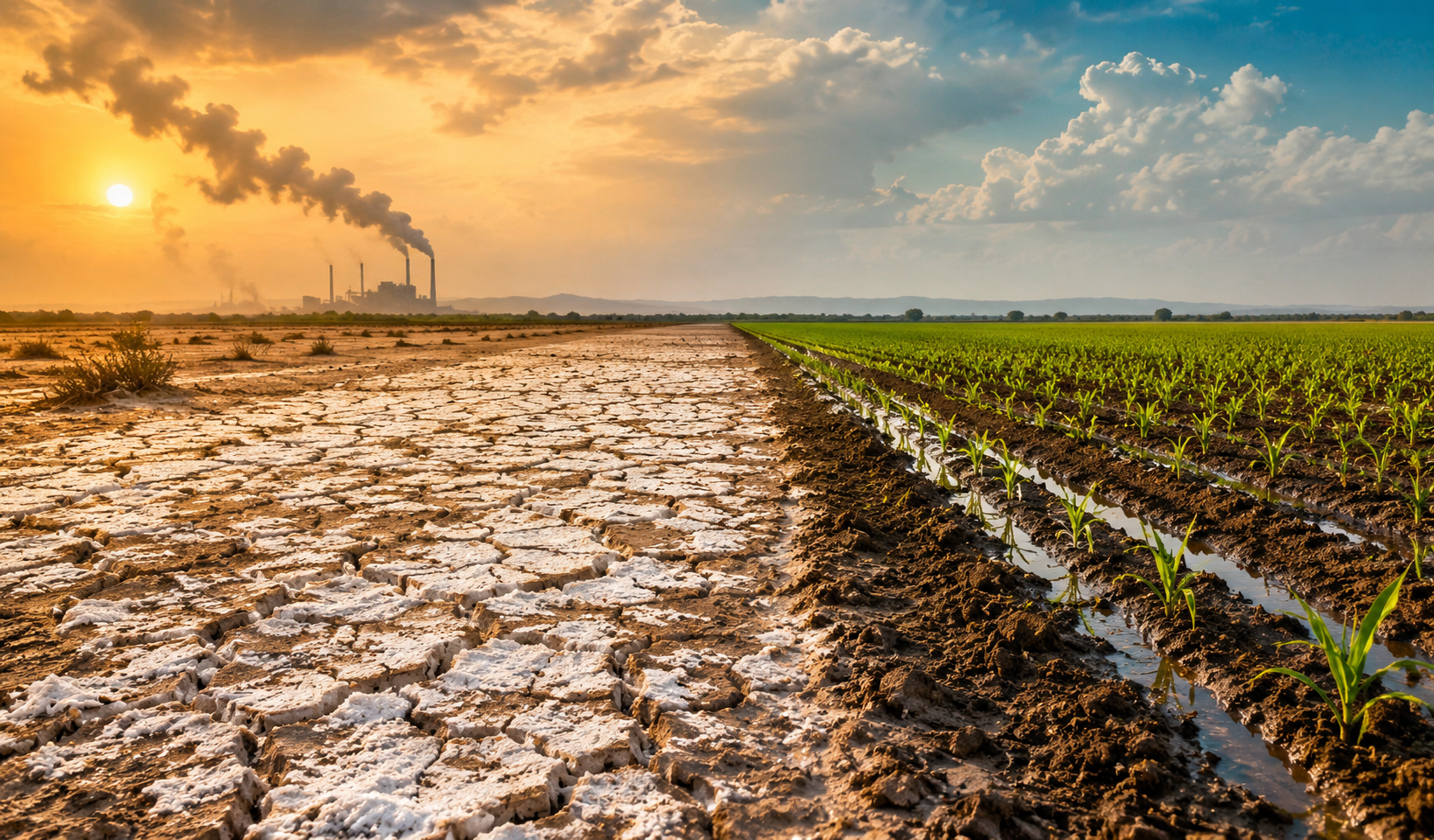
The results revealed dramatic increases in electrical conductivity — a key indicator of salinity — as drying temperatures rose. For example, in the Bartella soil, electrical conductivity increased from 0.55 dS/m before treatment to 6.8 dS/m after repeated wetting and drying at 50°C.
These findings demonstrate how warming temperatures can intensify salt accumulation in agricultural soils.
How Heat Alters Soil Chemistry
Heat stress changes both the physical and chemical behavior of soils. Elevated temperatures increase the movement and concentration of dissolved ions, especially sodium and chloride. As water evaporates, salts become more concentrated in the remaining soil moisture.
The study found substantial increases in sodium, calcium, magnesium, chlorides, bicarbonates, and sulfates as temperature increased.
Researchers also observed that certain minerals began precipitating under higher temperatures, including:
- Calcite
- Aragonite
- Ordered dolomite
- Disordered dolomite
At lower temperatures, many minerals remained dissolved, but warming encouraged crystallization and mineral formation.
This process can harden soils, reduce permeability, and limit water infiltration, making agriculture more difficult.
The Role of Soil Minerals and Texture
Soil texture strongly affects how soils respond to salinity and heat. Clay-rich soils often experience stronger ion interactions because clay particles carry electrical charges that attract dissolved ions.
The study explains that soil electrical conductivity depends not only on salt concentration but also on mineral interactions within the diffuse double layer (DDL), a charged zone surrounding soil particles.
Research published in the Indian Journal of Soil Science and Soil Conservation Research highlights how soil structure, cation exchange capacity, and organic matter content influence nutrient retention and salinity tolerance. Healthy soils with better aggregation and organic content are generally more resilient under climate stress.
The Iraqi study also measured soil texture and cation exchange capacity (CEC), showing that soils with higher clay and organic matter content responded differently to repeated salinity exposure.
Impacts on Crop Production
Salt stress directly affects plant growth by:
- Restricting water uptake
- Causing ion toxicity
- Reducing nutrient availability
- Damaging root membranes
- Lowering photosynthesis rates
Plants exposed to saline conditions often exhibit stunted growth, leaf burn, poor germination, and reduced yields.
A study published in Plants (MDPI) discusses how salinity disrupts plant physiological processes and causes oxidative stress. The research also emphasizes that rising global temperatures can worsen these effects by increasing evapotranspiration and soil salt concentration.
Thermal stress and salinity together create a compounding effect. High temperatures increase plant water demand while saline soils simultaneously reduce the plant’s ability to absorb water.
Soil Salinity and Global Food Security
The connection between soil degradation and food security is becoming increasingly concerning. Climate change is expected to expand salt-affected soils across many agricultural regions during the coming decades.
The uploaded study notes that soil is fundamental to global food production and that climate-driven changes threaten long-term agricultural sustainability.
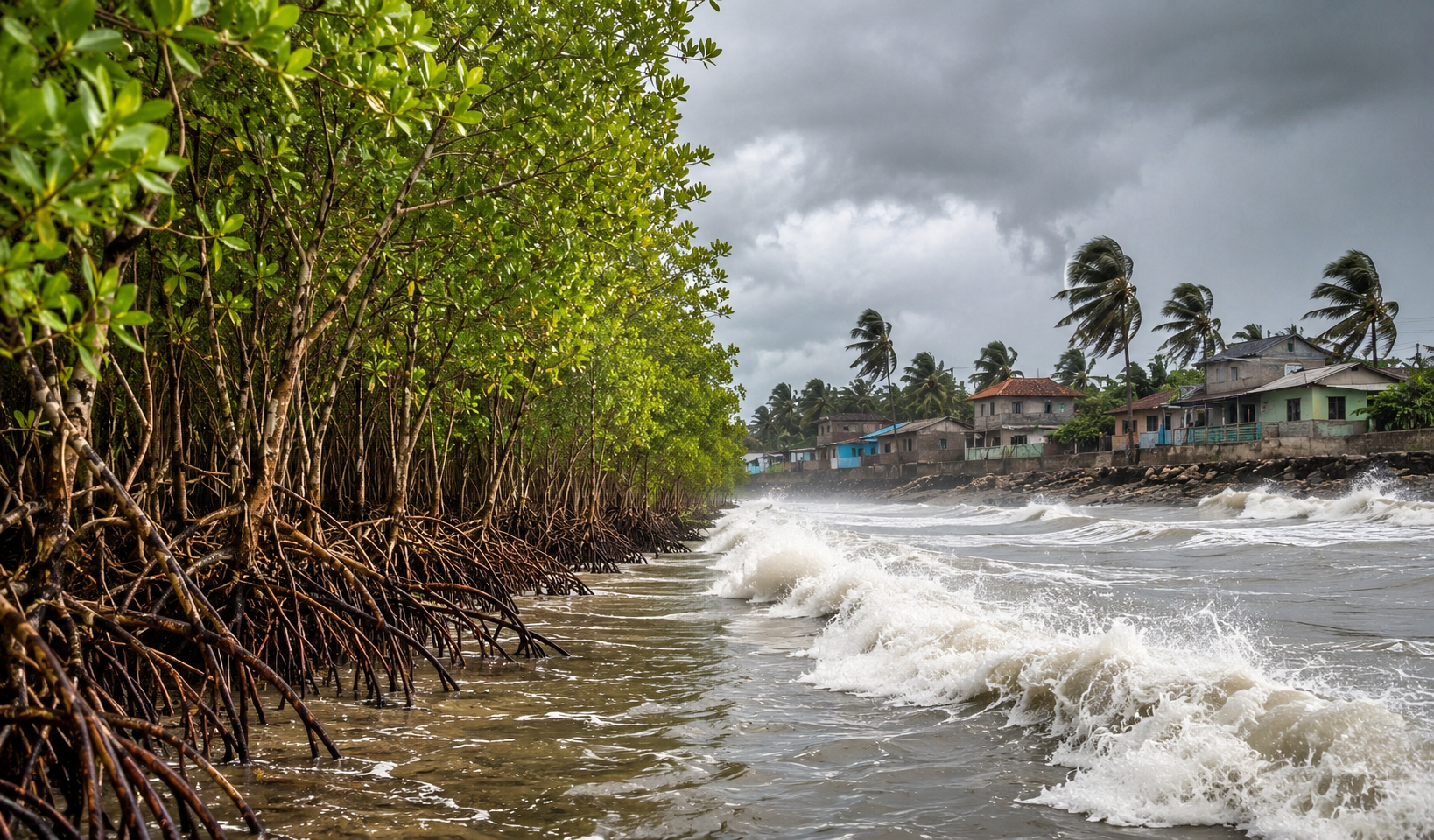
Globally, millions of hectares of farmland are already affected by salinity. Coastal regions are particularly vulnerable because rising sea levels can introduce saltwater into groundwater and agricultural land.
Without proper management, soil salinization may reduce crop productivity, increase irrigation costs, and contribute to land abandonment.
Strategies to Reduce Soil Salinity
Scientists and agricultural experts recommend several approaches to manage salt-affected soils:
Improved Irrigation Management
Using high-quality irrigation water and optimizing irrigation schedules can help prevent salt buildup.
Better Drainage Systems
Proper drainage allows excess salts to move below the root zone instead of accumulating near the surface.
Organic Matter Addition
Compost and organic amendments improve soil structure and water movement while increasing microbial activity.
Salt-Tolerant Crops
Breeding and planting salt-tolerant crop varieties can improve agricultural resilience.
Climate-Smart Farming
Conservation agriculture, mulching, and efficient water use can reduce evaporation and salt concentration.
Soil Monitoring
Regular monitoring of electrical conductivity and soil chemistry helps farmers detect salinity problems early.
Conclusion
Rising temperatures and soil salinity are becoming major threats to global agriculture. Research increasingly shows that repeated cycles of heat and saline irrigation can rapidly alter soil chemistry, increase mineral precipitation, and reduce soil productivity.
The recent Iraqi study provides important evidence that higher drying temperatures significantly accelerate salt accumulation and mineral changes in soils. Combined with findings from global soil and plant research, these results highlight the urgent need for sustainable soil management strategies under climate change.
Protecting soil health will be essential for maintaining food security, conserving water resources, and supporting agricultural systems in an increasingly warming world.
References
- Alhadidi, Khalid Ekhlayef N. 2025. “Effect of Salt and Thermal Stress on the Chemical and Mineral Properties of Soil”. Asian Journal of Plant and Soil Sciences 10 (1):106-14. https://doi.org/10.56557/ajopss/2025/v10i1120.
- Warrence, N. J., Bauder, J. W., & Pearson, K. E. (2002). Basics of salinity and sodicity effects on soil physical properties. Departement of Land Resources and Environmental Sciences, Montana State University-Bozeman, MT, 129, 1-29. https://waterquality.montana.edu/energy/cbm/background/soil-prop.html
- J.A. Farooqi, A.K. Rai and Manisha, N. A. S. C. (2019). Chemical Properties of the Salt-affected Soils and Performance of Wheat (Triticum aestivum) with Saline and Alkali Water Irrigation. Journal of the Indian Society of Soil Science, 66(3). https://epubs.icar.org.in/index.php/JISSS/article/view/86456
- Song, X., Su, Y., Zheng, J., Zhang, Z., Liang, Z., & Tang, Z. (2022). Study on the Effects of Salt Tolerance Type, Soil Salinity and Soil Characteristics on the Element Composition of Chenopodiaceae Halophytes. Plants, 11(10), 1288. https://doi.org/10.3390/plants11101288